
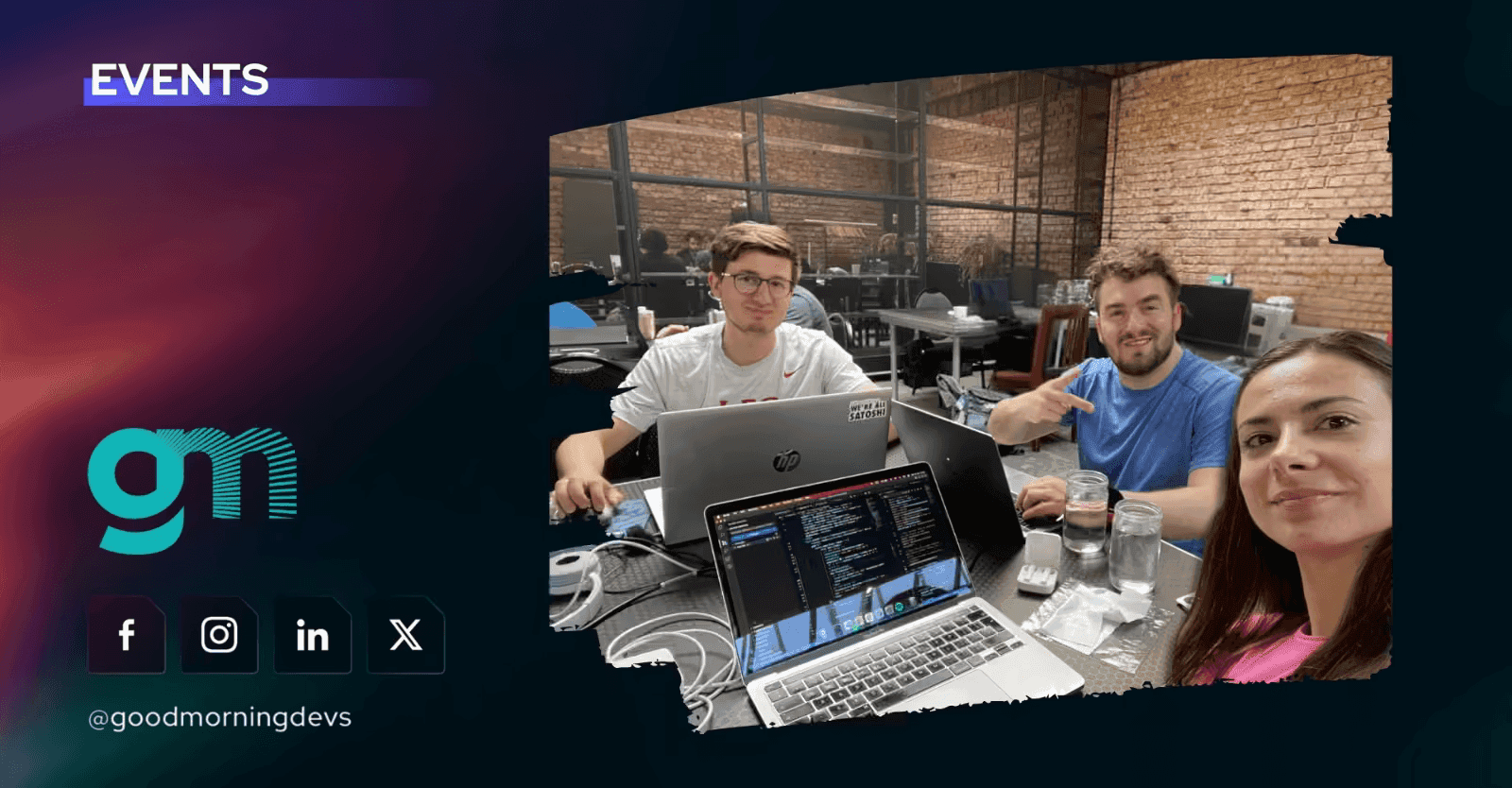
Sometimes the best solutions come from the most challenging environments. ETH Prague 2023 was exactly that kind of inspiring challenge.
The dust has settled, the energy drinks have been consumed, and the verdict is in: goodmorning took home the Ethereum Future Award at ETH Prague 2023 with QR Seal - a privacy-preserving, gas-optimized PWA multisig wallet that's redefining account abstraction.
Why ETH Prague? Why Us?
ETH Prague isn't just another hackathon - it's a hybrid powerhouse combining conference insights with hands-on building, complete with technical workshops designed to fuel innovation. With 95 projects from hackers gathering onsite from all over the world, the offline format ensures the kind of networking and collaboration that remote events just can't match.
We decided to make the trip after our Ambire colleagues shared glowing feedback from previous ETH Prague events. But here's the thing - we didn't scatter our focus across multiple tracks. We went all-in on the "Ethereum Future" category because we knew exactly what we wanted to build.
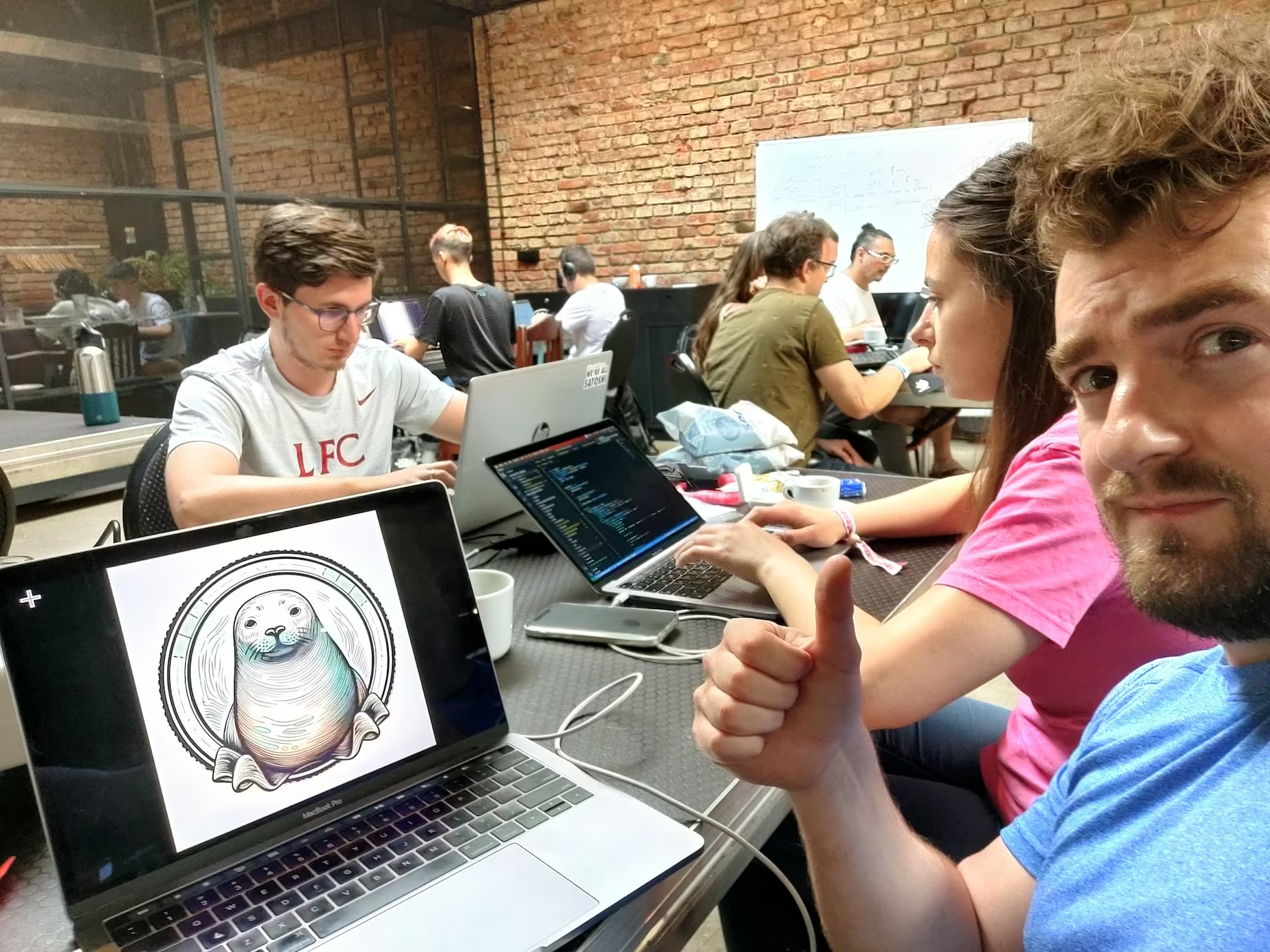
The problem we couldn't ignore
Multisig wallets are supposed to be secure, but let's be honest - most of them are UX nightmares. Coordinating signatures across multiple parties? Painful. Gas costs scaling with every additional signer? Expensive. Privacy? What privacy - everyone can see who signed what on-chain. We looked at this mess and thought: "There has to be a better way."
What really got us fired up is that traditional multisigs force you to choose between security and usability. Want more signers for better security? Prepare to pay through the nose in gas fees. Need privacy for your business transactions? Too bad - every signature is public for the world to analyze. And don't even get us started on the coordination nightmare of getting multiple parties to sign transactions across different devices and locations.
But what if we could flip the script entirely? What if signing could happen off-chain, in person, with complete privacy - and then broadcast as a single, gas-efficient transaction? That's when we realized account abstraction wasn't just a cool new standard - it was the key to unlocking Schnorr signatures on Ethereum.
Meet QR Seal: Multisig that actually works
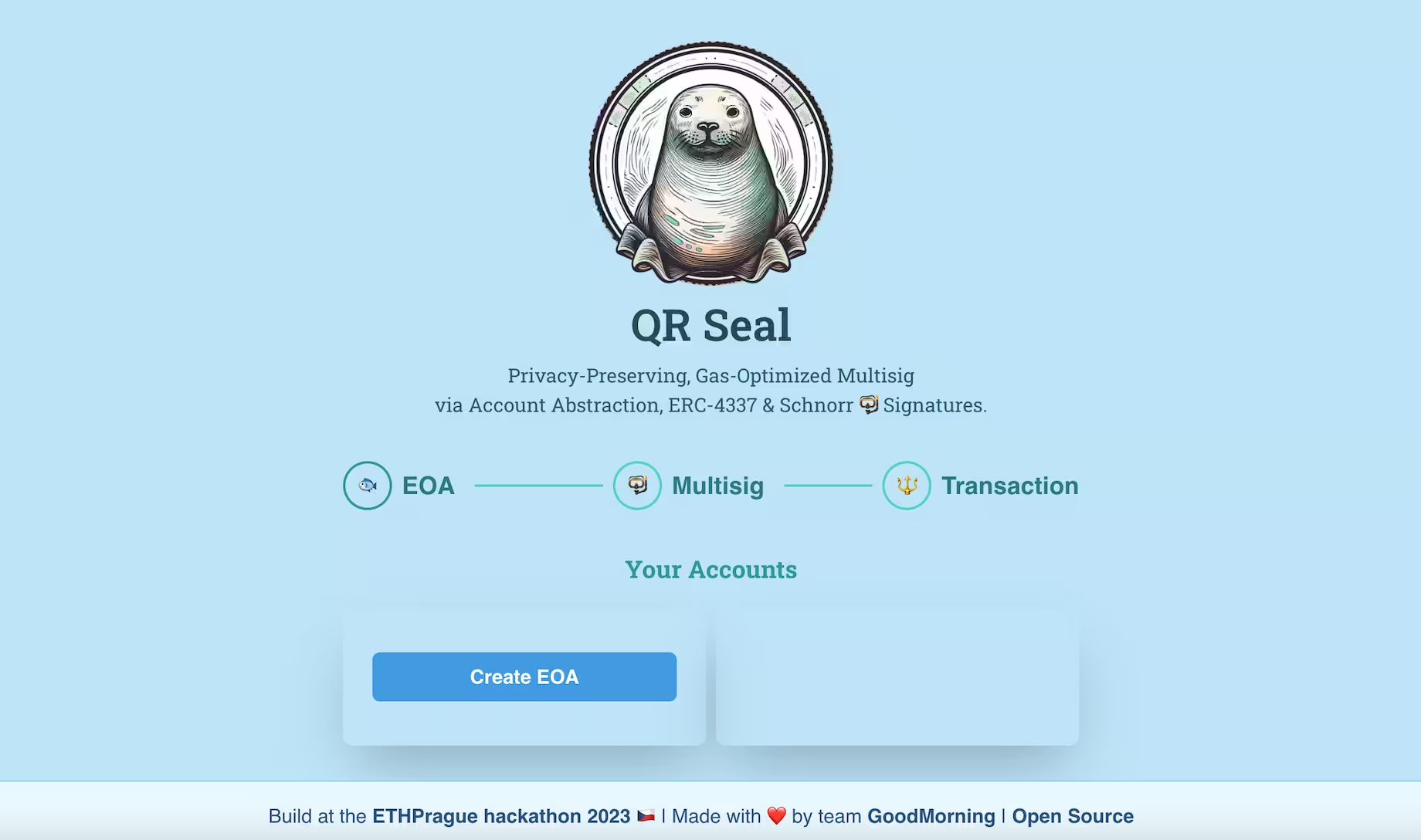
Our Web3 development team - Borislav Itskov, Kaloyan Kosev, and Gergana Mihaylova - built something that sounds almost too good to be true: a mobile multisig wallet where signers stay anonymous, gas costs remain static regardless of participant count, and coordination happens as simply as scanning QR codes between devices.
Here's how QR Seal stacks up against traditional multisig wallets across the metrics that actually matter:
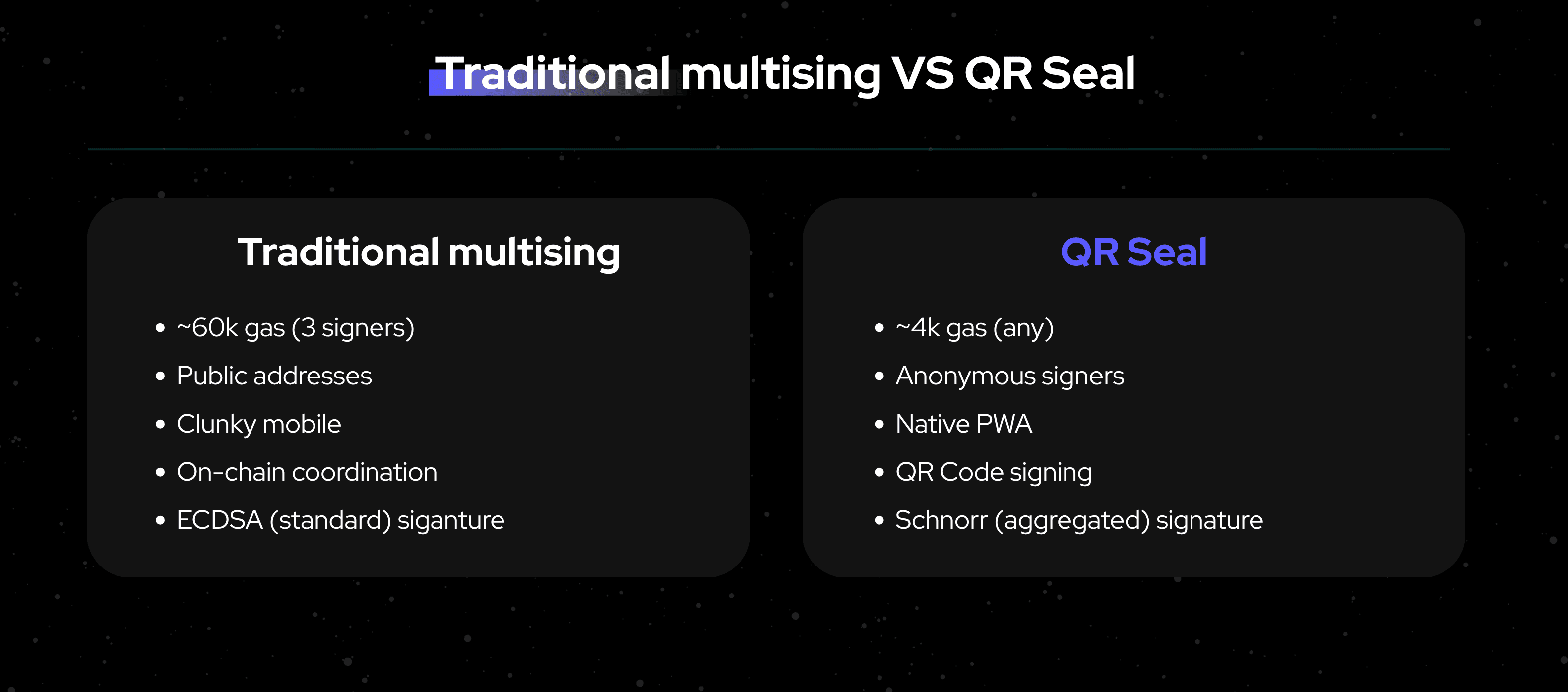
The magic sauce? Schnorr signatures combined with account abstraction (ERC-4337).
Here's why this matters:
- Privacy by design: Signers aren't revealed on-chain. Your business stays your business.
- Gas efficiency that actually matters: Single signature verification costs ~4k gas regardless of how many signers you have. Yes, you read that right.
- Mobile-first UX: Off-chain signing via QR codes, on-chain broadcasting only when the signature is complete.
Technical deep dive (because we know you want it)
Built with Solidity, React, and PWA technology, QR Seal leverages the full power of account abstraction. The workflow is elegantly simple:
Transaction initiated on one device QR codes facilitate off-chain signature collection Schnorr signature aggregation happens seamlessly Single on-chain transaction broadcasts the complete signature
Threshold signatures are also possible in the future, via FROST or other Schnorr schemes.
Lessons learned and key takeaways
Every hackathon teaches you something new - even when you win. Here's what we learned from our ETH Prague 2023 journey that goes beyond the technical implementation.
What worked well
Strategic focus paid off big time. Going all-in on the "Ethereum Future" track instead of spreading ourselves thin across multiple categories was the right call. We knew our strengths, we knew the problem we wanted to solve, and we executed with precision.
Account abstraction was our secret weapon. While other teams were building incremental improvements to existing solutions, we leveraged ERC-4337 to unlock possibilities that simply weren't available before. Schnorr signatures on Ethereum? That's the kind of innovation that catches judges' attention.
Mobile-first thinking differentiated us. Most multisig solutions are desktop-heavy and clunky. By designing for mobile from day one, we solved real UX problems that users actually face in the wild.
Team chemistry under pressure. Borislav, Kaloyan, and Gergana worked like a well-oiled machine. When you've got solid technical foundations and clear communication, even the toughest challenges become manageable.
Challenges faced
State management complexity hit harder than expected. Keeping nonce states synchronized across multiple devices and participants isn't just a technical challenge - it's a UX minefield. One wrong step and the entire signing process breaks down.
QR code limitations became our biggest bottleneck. Data compression isn't glamorous, but it's critical. Every byte matters when you're trying to encode complex cryptographic information into scannable formats that work across different devices and lighting conditions.
Real-world testing revealed device inconsistencies. What works perfectly on your development device might refuse to scan on someone else's phone. Hardware variations, camera quality, and scanning algorithms all impact the user experience in ways you can't predict until you test extensively.
Advice for future hackathon participants
-
Pick your battles strategically. Don't try to win every category - find the one where your skills and vision align perfectly, then dominate it. Quality beats quantity every time.
-
Solve real problems, not theoretical ones. Judges can spot genuine innovation from a mile away. If you're not addressing actual pain points that real users face, you're just building tech demos.
-
Test on real devices early and often. Your MacBook Pro might handle everything perfectly, but can your solution work on a three-year-old Android phone with a cracked screen? That's where real users live.
-
Embrace the constraints. QR code length limitations, gas cost restrictions, device compatibility issues - these aren't roadblocks, they're design challenges that force you to build better solutions.
As Borislav put it after we won: "The best hackathon projects aren't the ones with the most features - they're the ones that solve one problem exceptionally well. QR Seal works because we focused on making multisig actually usable, not just technically impressive."
Why this matters for Web3
Beyond the hackathon win and technical achievements, QR Seal represents something bigger for the entire Web3 ecosystem. What we’ve built isn’t just another hackathon project looking cool on stage. It's addressing fundamental UX and privacy issues that have been holding back mainstream multisig adoption. When you can make complex cryptographic operations feel as simple as scanning a QR code, you're not just building technology - you're building the future.
The Ethereum Future Award recognized exactly that: this isn't just innovative tech, it's the kind of foundational work that pushes the entire ecosystem forward.
🦄 Ethereum Future
— ETHPrague (@EthPrague) June 14, 2023
🏆 QR Seal: Multisig Wallet 🦭
Privacy-Preserving, Gas-Optimized Mobile Multisig via Account Abstraction & Schnorr 🤿 Signatures.
👉 https://t.co/ZWk541lgzv pic.twitter.com/N2qgrZDqXt
Frequently asked questions
What is QR Seal?
QR Seal is a privacy-preserving multisig wallet built on Ethereum using account abstraction (ERC-4337) and Schnorr signatures. It allows multiple parties to sign transactions off-chain via QR codes, then broadcast a single on-chain transaction with constant gas costs regardless of signer count.
How does QR Seal protect signer privacy?
Unlike traditional multisig wallets where every signer's address is visible on-chain, QR Seal uses Schnorr signature aggregation to combine multiple signatures into one. This means individual signers remain anonymous - only the final aggregated signature appears on the blockchain.
Why are gas costs constant in QR Seal?
Traditional multisig wallets verify each signature separately, so gas costs scale linearly with the number of signers (3 signers = 3x gas cost). QR Seal verifies a single aggregated Schnorr signature regardless of how many people signed, keeping gas costs at approximately 4,000 gas per transaction.
What is account abstraction (ERC-4337)?
Account Abstraction (ERC-4337) is an Ethereum standard that allows smart contract wallets to behave like regular externally owned accounts (EOAs). It moves account logic (such as signature validation and transaction execution) into smart contracts, enabling advanced features like custom signature schemes (e.g., Schnorr, BLS), gas sponsorship (someone else paying gas), and programmable transaction logic - all without requiring changes to Ethereum’s core protocol or consensus layer.
How long did it take to build QR Seal?
The goodmorning team - Borislav Itskov, Kaloyan Kosev, and Gergana Mihaylova - built QR Seal's MVP in 48 hours during the ETH Prague 2023 hackathon. The project won the Ethereum Future Award for its innovative approach to multisig privacy and gas optimization.
Can I use QR Seal for my business transactions?
QR Seal is currently a proof-of-concept built during a hackathon. While the core technology works, it would need additional security audits, testing, and production hardening before being used for real business transactions involving significant funds.
What are Schnorr signatures?
Schnorr signatures are a digital signature scheme that supports efficient multi-signature and signature aggregation. This allows multiple signers to produce a single compact signature that is as efficient to verify as a single signature. In schemes like MuSig, the resulting signature can be made indistinguishable from one produced by a single signer, improving both efficiency and privacy compared to traditional ECDSA, which lacks native aggregation support.
What was the biggest technical challenge building QR Seal?
The biggest challenge was managing nonce state synchronization across multiple devices during off-chain signing. QR code data compression was also critical - encoding complex cryptographic information into scannable formats that work reliably across different devices and lighting conditions required careful optimization.
What's next?
ETH Prague 2023 proved once again that the best innovations happen when brilliant minds execute with precision in high-energy environments. QR Seal is just the beginning - we're already exploring how threshold signatures and advanced cryptographic primitives can make Web3 more accessible without sacrificing security.
Want to see what happens when technical vision meets flawless execution? This is exactly the kind of innovation we bring as Web3 technical co-founders for ambitious startups. Ready to turn your idea into an award-winning product? Let's talk.

Written by Goran Stoyanov
Goran Stoyanov is a developer-turned–managing partner at goodmorning.dev, combining a decade of hands-on engineering with responsibility for vision, client strategy, and execution in Web3.
Ready to take the next step in your Web3 journey?
Drop us a message and let's see what Web3 development services we can do for you.
You may also like...
Check out our recent blog posts

How to build a passwordless Web3 login system
Passwordless Web3 login replaces passwords with wallet-based message signing. Learn how SIWE, nonce validation, backend sessions, and UX design work together to secure authentication.
EthCC Cannes 2026 recap: valuable insights
EthCC[9] in Cannes from a builder’s perspective - Aave V4’s new architecture, the real challenges of shipping EIP-7702 in wallets, practical ZK use cases, and the side events where the best conversations actually happened.

How to verify wallet ownership in a Web3 app
Verifying wallet ownership in a Web3 app requires more than connecting a wallet. This guide explains message signing, backend signature validation, nonce handling, and secure session creation so you can implement authentication correctly and prevent replay attacks.